Commodities have been exploding - What does that mean for the next year?
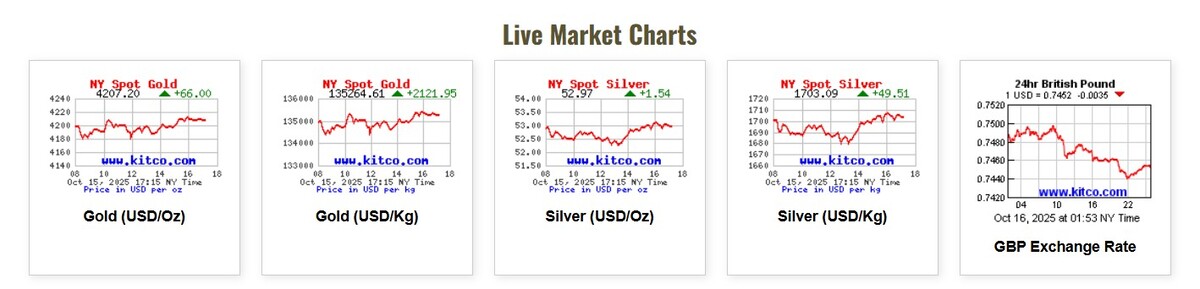
Gold vaulted past $4,200 and silver cracked the $52 mark in mid-October 2025 — a seismic move that leaves investors and collectors asking: what comes next year? The near-term drivers that pushed precious metals to these levels are still in force, but 2026 will likely be a tug-of-war between continued safe-haven flows and the very real risks that could stall the rally. Reuters+1
Why prices ran higher this autumn is straightforward: markets are pricing a softer U.S. policy path and more macro uncertainty. Traders have grown increasingly confident the Federal Reserve will loosen policy, which reduces the opportunity cost of holding non-yielding metals; at the same time, geopolitical frictions and trade worries have strengthened safe-haven demand. Those forces helped push spot gold to record highs above $4,200 and silver into the low $50s. Reuters+1
Fundamentals for silver are particularly notable. Unlike gold, silver carries substantial industrial demand — solar panels, EVs, and electronics — and many analysts point to multi-year supply shortfalls that tighten the physical market. That structural deficit, combined with ETF inflows and speculative positioning, has amplified silver’s upside this year. Several broker forecasts now show materially higher targets for silver into 2026 as the metal’s industrial uses and supply constraints collide with investor demand. The Economic Times+1
Several big-bank and institutional forecasts have been revised up — Bank of America lifted its 2026 gold target toward $5,000 and sees silver nearer $65 in some scenarios — and other strategists are now openly modeling $4,400–$5,000 gold in the medium term. Central-bank buying remains a background tailwind: official purchases continue to add to structural demand for allocated bullion. Reuters+1
So what should investors expect in 2026? First, volatility will stay elevated. A policy surprise — either a Fed that keeps rates higher for longer or a sharper-than-expected slowdown that crimps industrial demand — could quickly reverse gains, especially for silver. Second, the rally’s longevity depends heavily on real interest rates and the dollar: if real yields fall further, gold and silver will likely grind higher; if they re-accelerate, expect profit-taking and mean reversion. World Gold Council+1
Practical scenarios to watch: (1) a “soft-landing” with gradual Fed cuts and persistent geopolitical risk could lift gold toward $4,500–$5,000 and silver into the $60s; (2) a winter of stronger growth and higher real rates could cap gold and send silver lower as industrial users pull back; (3) an escalation in central-bank reserve purchases or a physical squeeze in silver could trigger rapid, short-term spikes and squeeze plays in the futures market. Reuters+1
For advisors and self-directed investors, the sensible play is balance: maintain liquidity, hedge with allocated bullion (not just paper), and size positions with stop-loss discipline — and be explicit about timeframe. Precious metals are acting like insurance right now; how long you hold them should reflect how much downside protection you want versus how much short-term return you’re chasing.
In short: the macro setup that sent gold past $4,200 and silver over $50 is intact, but the path in 2026 will be choppy. Upside is plausible and well-priced by many houses — but so are the crosswinds that can quickly undo gains(2011, anyone?). Stay nimble, keep an eye on Fed guidance, and watch physical market signals for the clearest clues. Fortune Goldsilver
Questions? Contact Kyle